


Made in Hawick, Scotland
How a Cashmere Sweater Is Made in Hawick
Every Billie Todd sweater is knitted, linked and washed in Hawick, the Scottish Borders town that has made knitwear since 1771. Here is what happens between a cone of Todd & Duncan yarn and the sweater on your shoulders.
Free U.S. shipping · Free U.S. returns within 30 days

Between a cone of yarn and the sweater on your shoulders are seven pairs of hands and about a week.
Our yarn is spun by Todd & Duncan in Kinross. Everything after that happens in Hawick, in the Scottish Borders.

The town
Knitting by frame since 1771
- 1771
Magistrate John Hardie brings the first stocking frames to Hawick. The town has four.
- 1840s
Hawick holds about half of all the knitting frames in Scotland.
- 1860s
William Cotton patents a powered frame that knits shaped pieces: the start of full fashioning.
- Today
A handful of Hawick mills still link, wash and finish by hand. Ours is one of them.
From cone to crewneck
Follow the thread
Seven steps, each one there to make the sweater last.
 Step 1
The yarn arrives in oil
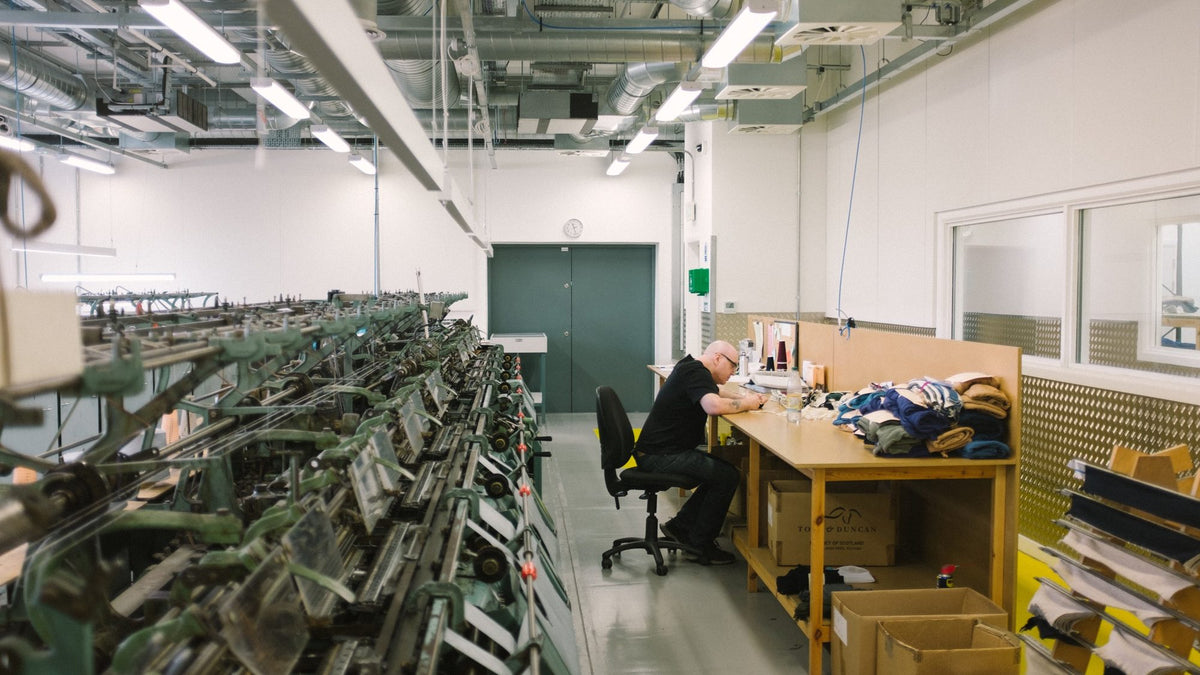
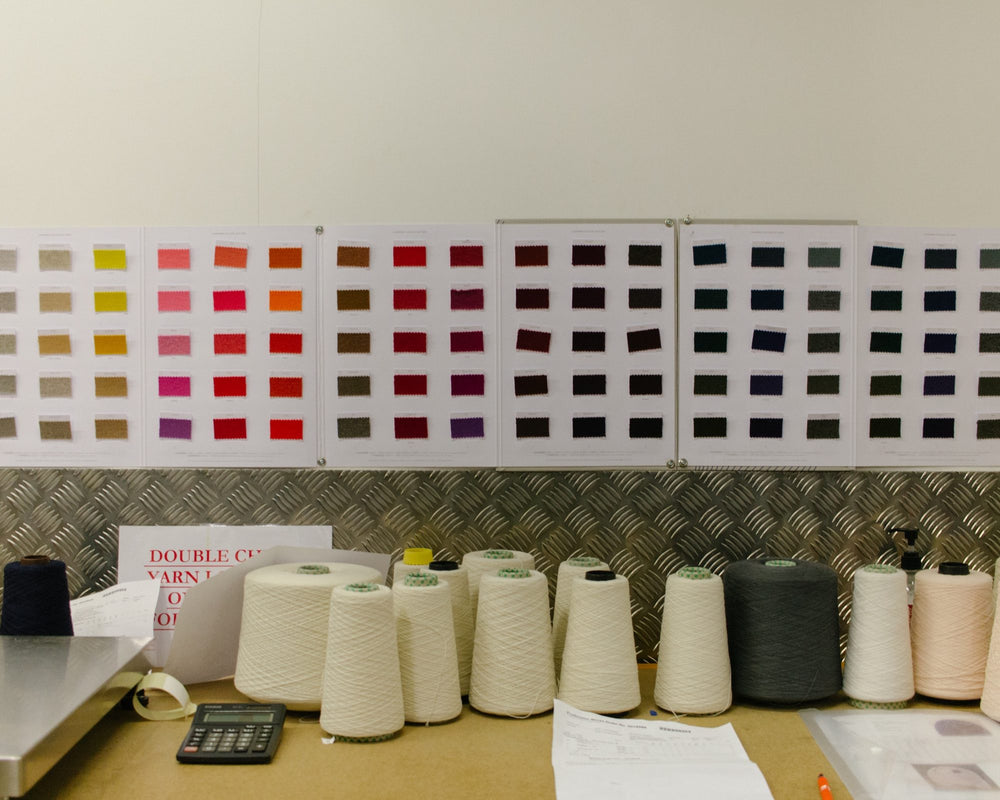
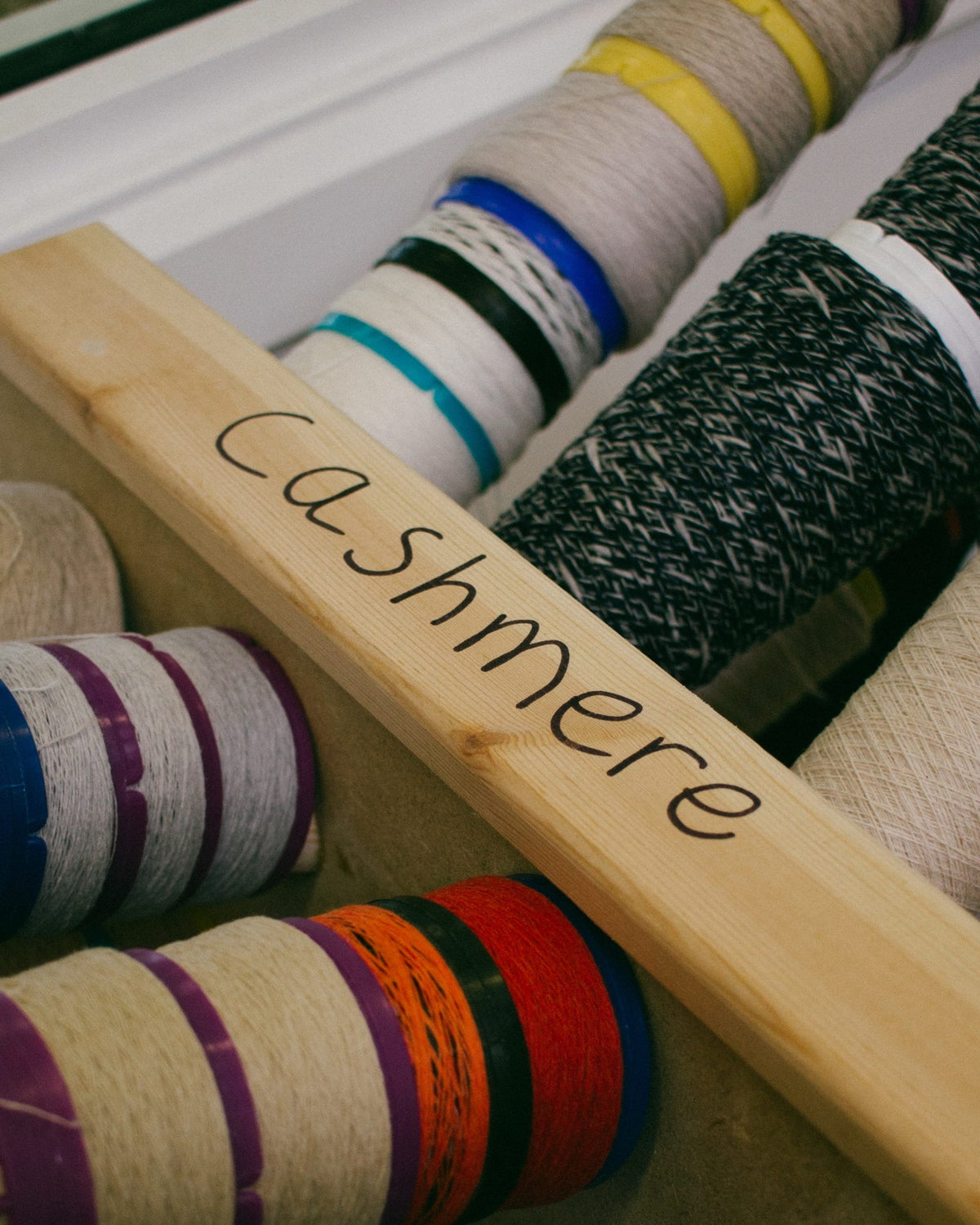
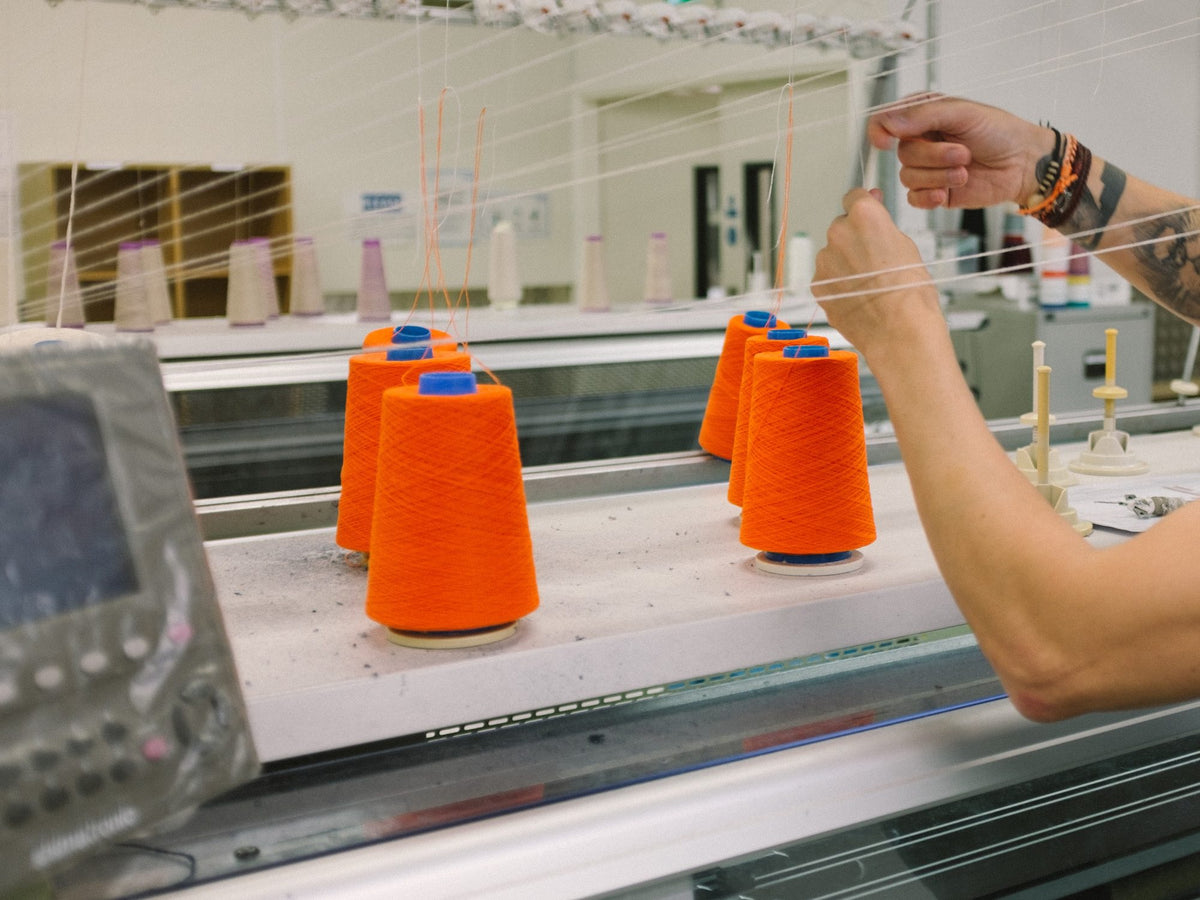
A cone of cashmere fresh from the spinner feels a little stiff and slick. That is deliberate. Cashmere fibres are fine and short, and a knitting machine pulls on yarn hard, so the spinner leaves a measured amount of oil in the yarn to let it run through the needles without breaking or shedding. The trade calls it knitting “in oil.” The yarn is wound again before knitting so it feeds at an even tension, row after row.
 Step 2
Knitted to shape
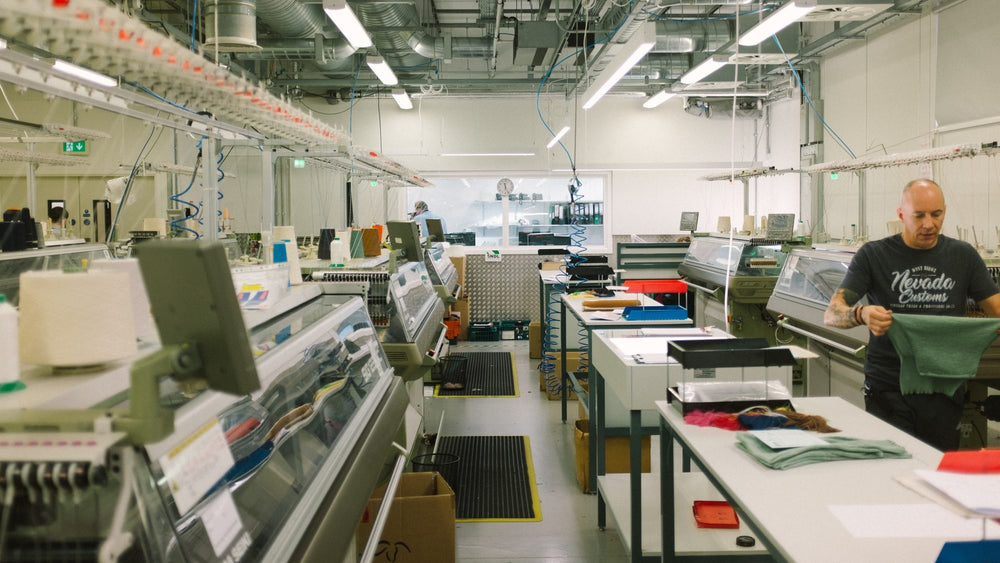
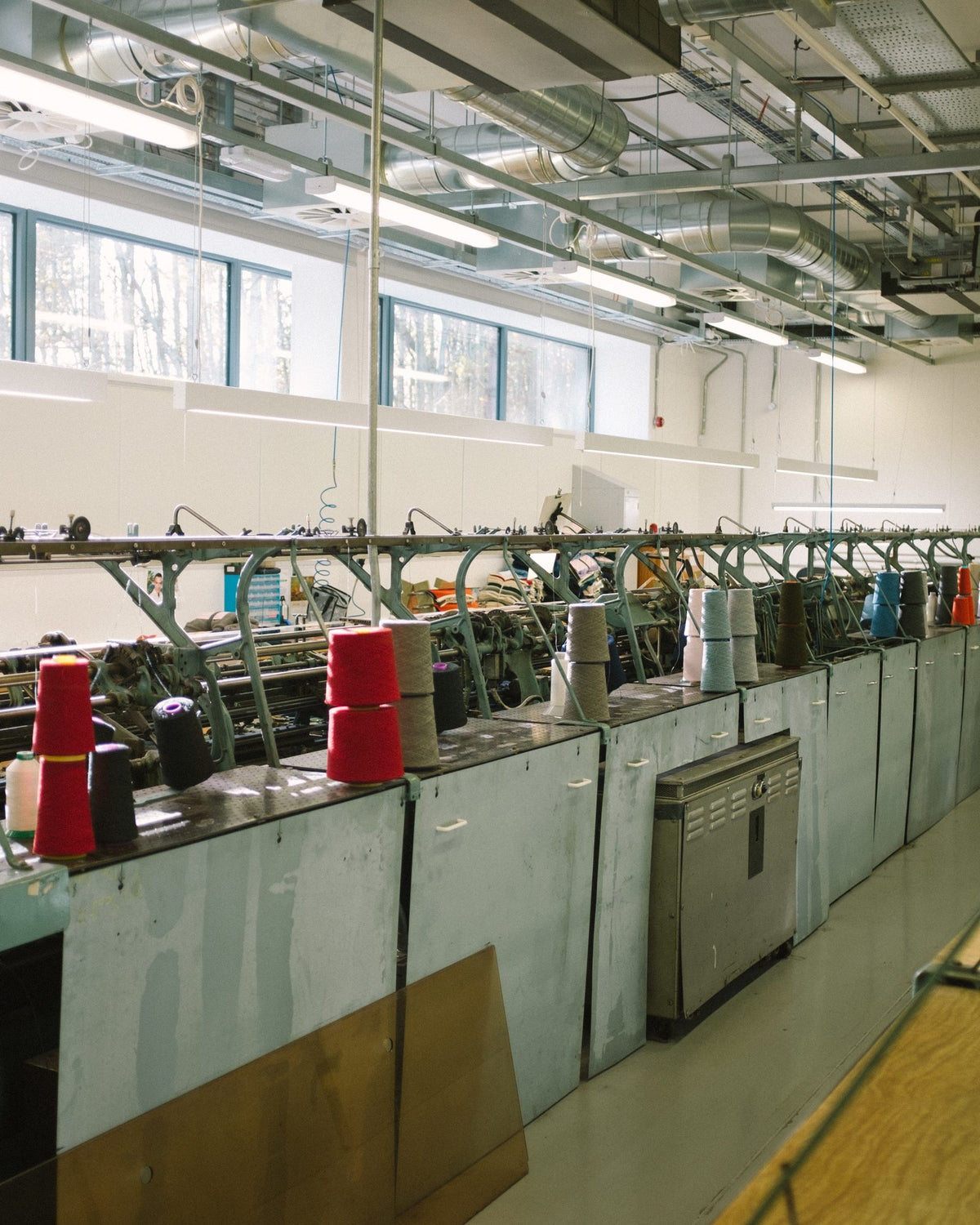
Each sweater is knitted as separate panels: front, back, two sleeves and the trims. Each panel starts with its rib, then knits upward. Rather than knitting a length of fabric and cutting a sweater from it, the frame narrows or widens the panel as it goes by moving the outer stitches inward a few needles at a time. This is full fashioning. Nothing is cut, so no edge can unravel, and Hawick knits tight, putting more yarn into each panel so the sweater keeps its shape for decades.
 Step 3
Checked under the light
Every panel is stretched over a lit table and examined by hand for a dropped or uneven stitch. A fault caught here is mended, or the panel is unravelled and the yarn reused. A fault missed here is a fault for life, so nobody hurries.
 Step 4
Linked, loop by loop
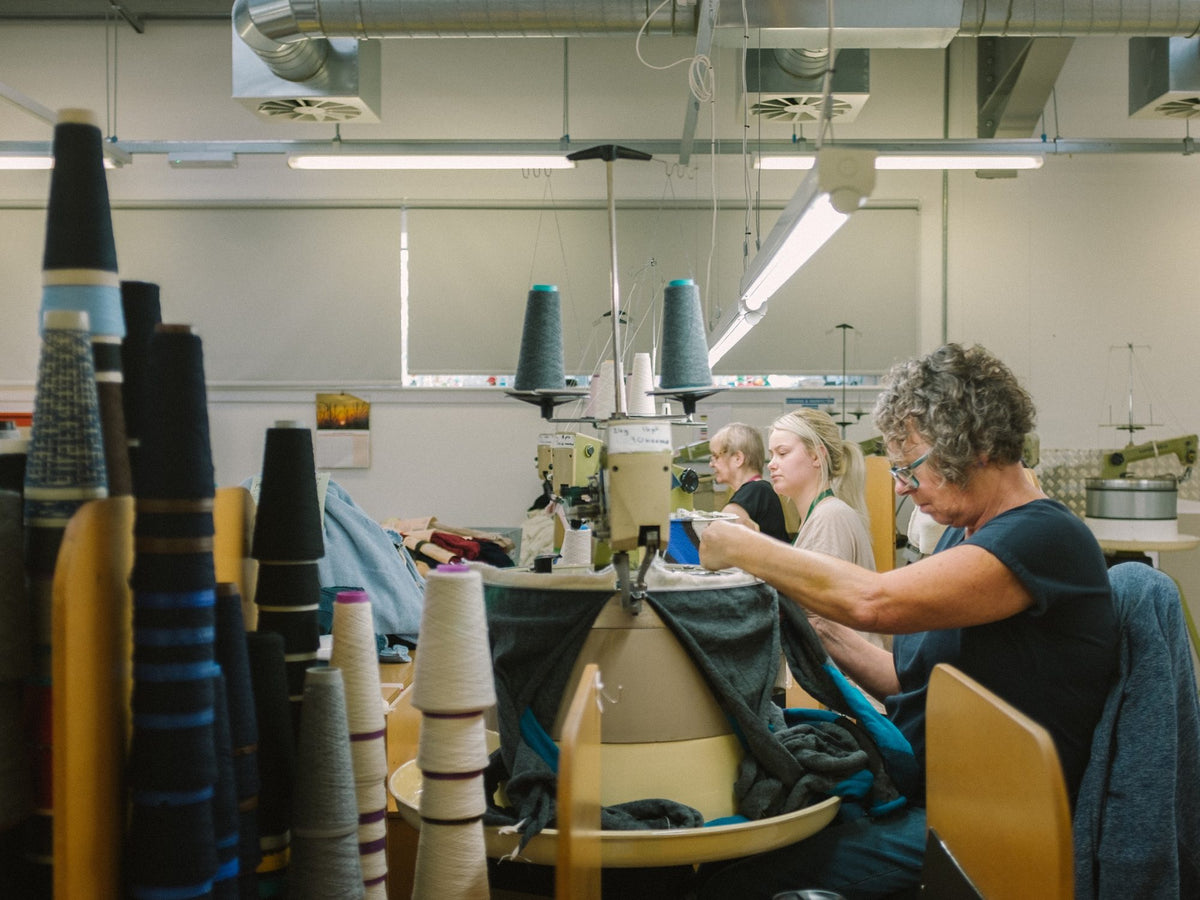
The panels are joined on a linking machine, a ring of fine points. The linker hangs the edge of one panel on the points, one loop to each point, lays the matching panel over it, and the machine chain-stitches them together. The seam is knitted into the fabric rather than sewn across it, so it lies flat and stretches with the sweater.
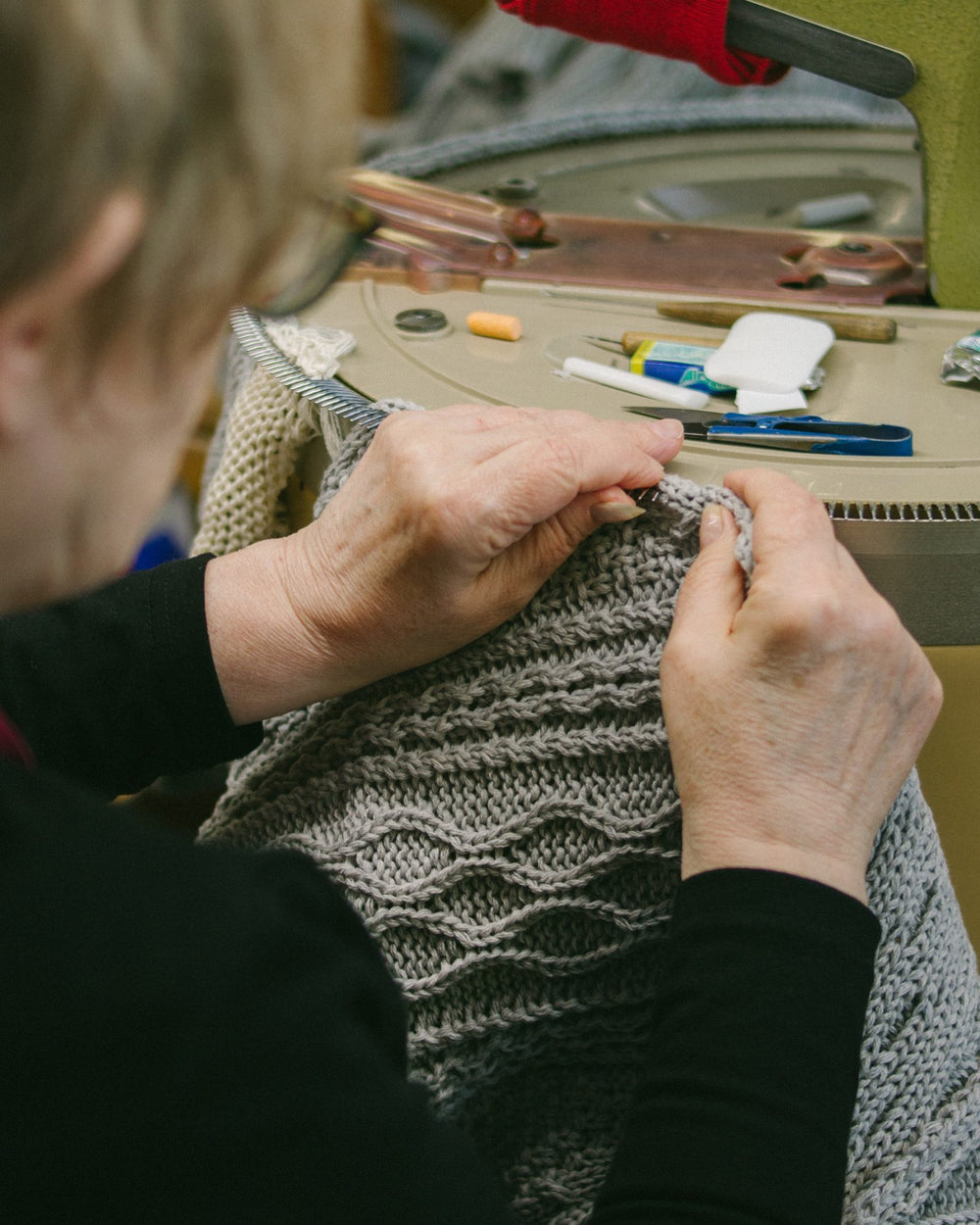
 Step 5
Finished by hand
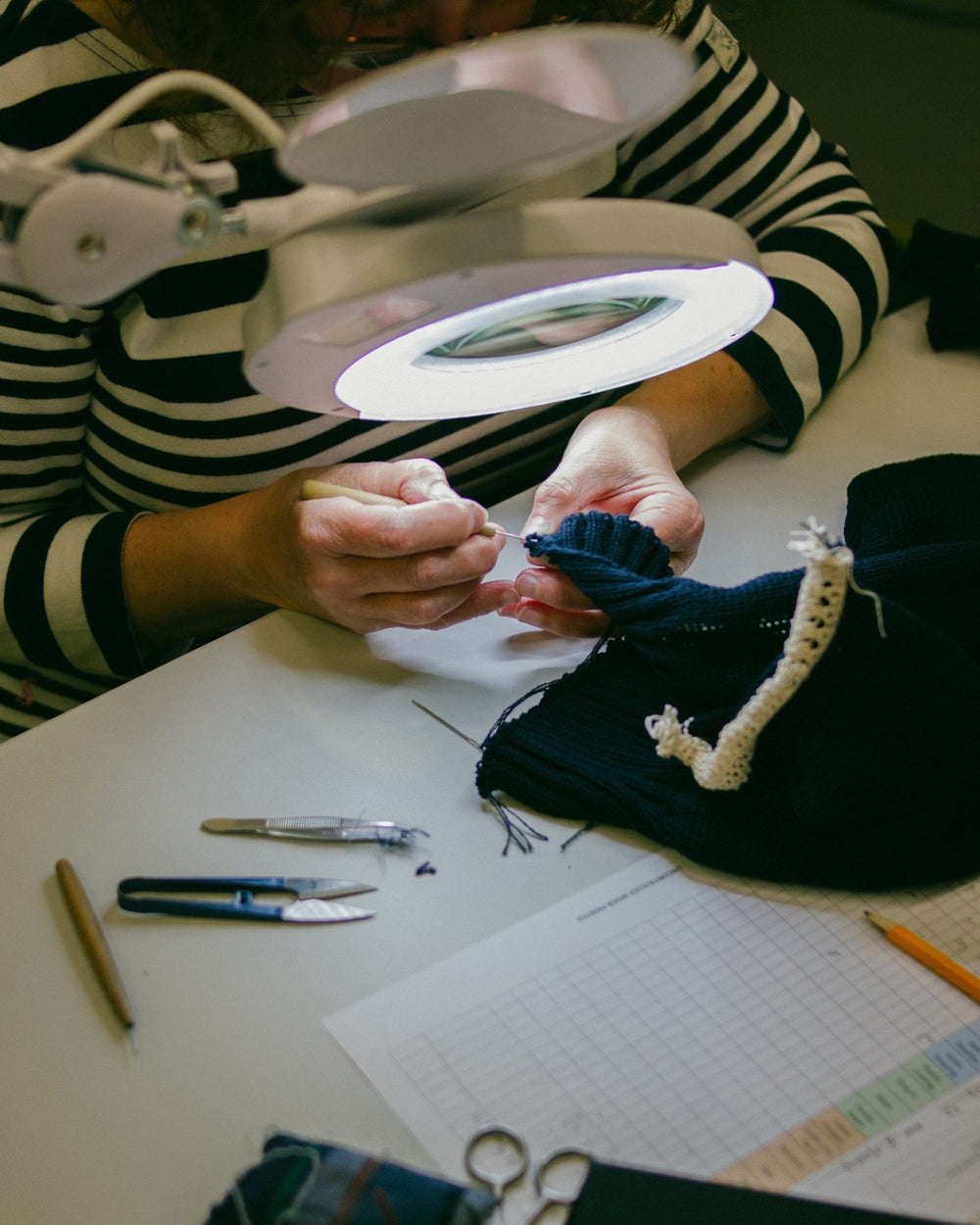
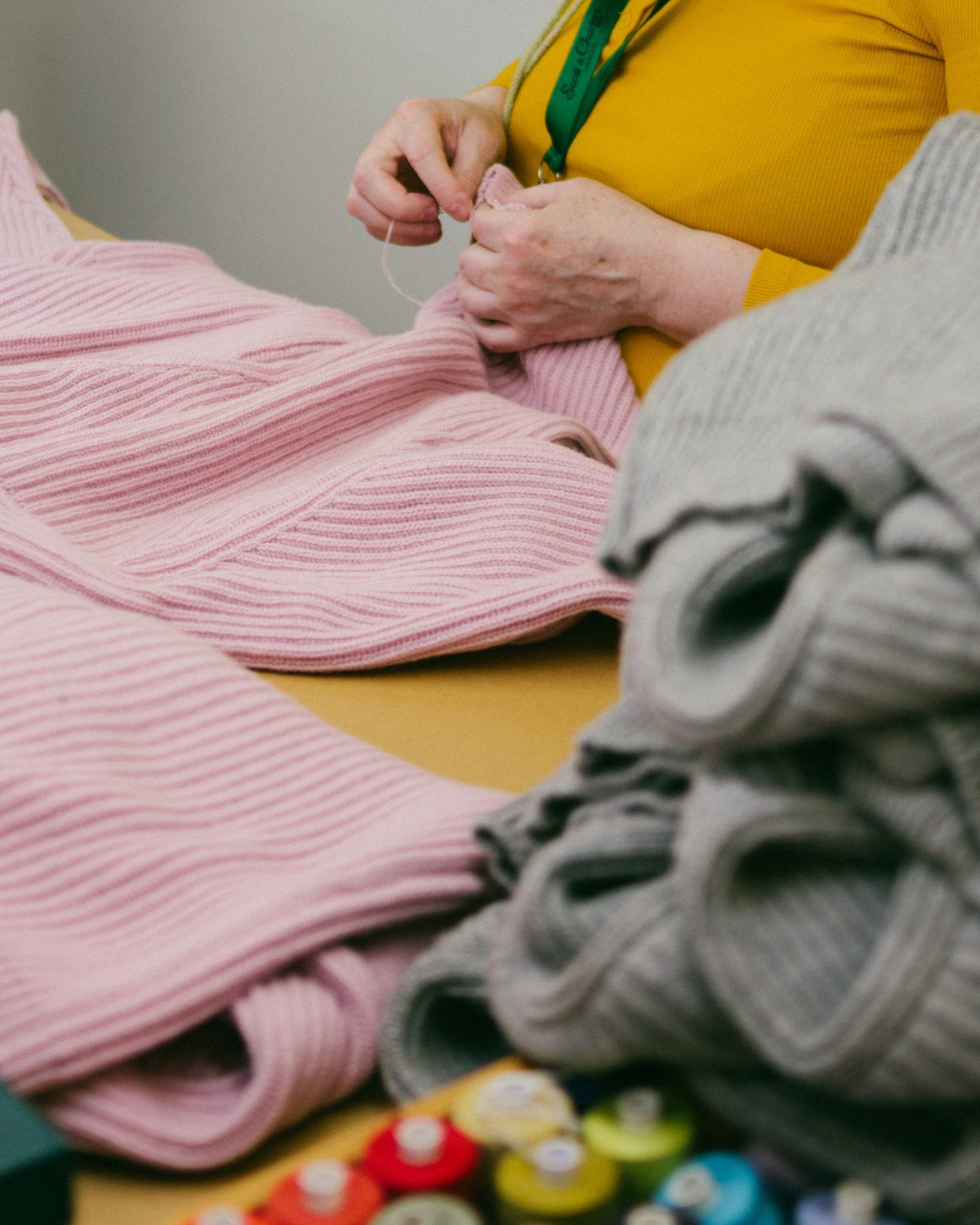
Next the sweater goes to the finishers. Every loose end at the cuffs, ribs and collar is darned back into the knit with a needle, stress points at the shoulders are reinforced, and any stitch that needs neatening is mended by hand. It is quiet, close work, and it is why the inside of a Hawick sweater looks almost as tidy as the outside.
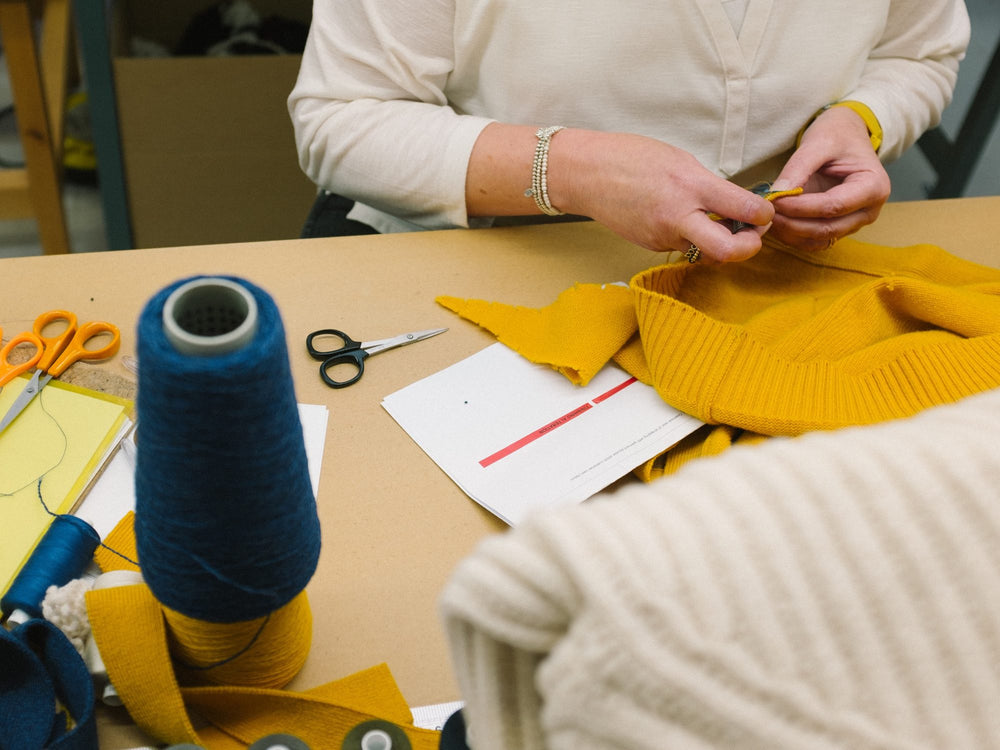
 Step 6
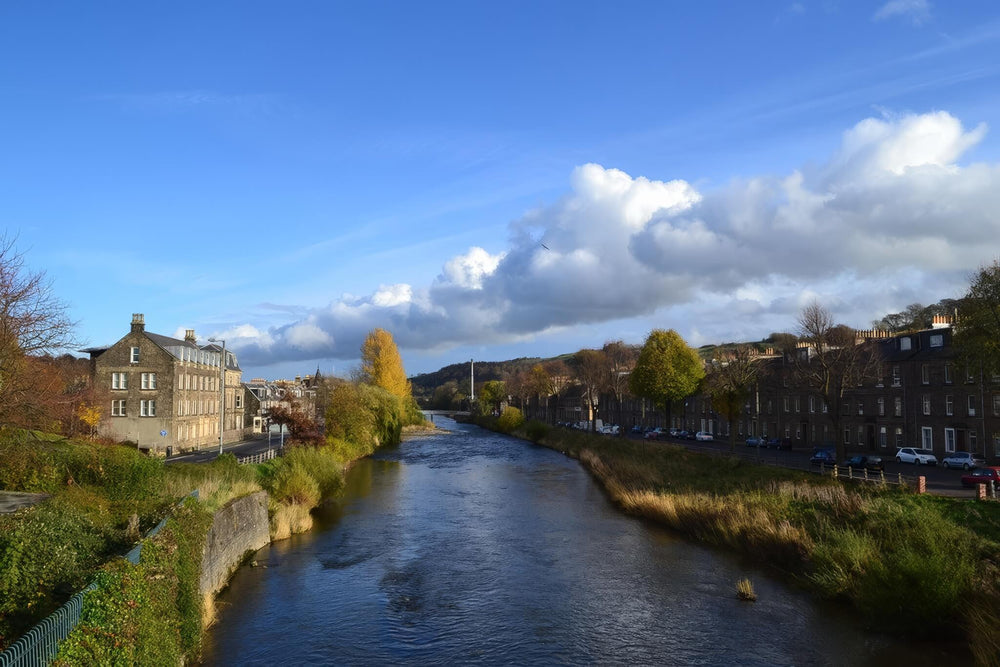
Washed in the Teviot
Now the sweater goes into the water. The River Teviot runs through Hawick, and Borders water is unusually soft, low in the minerals that leave fibres harsh. A short, warm wash lifts out the spinning oil and lets each fibre relax and open. This is the moment the sweater becomes cashmere. An experienced washer judges each batch by look and feel, and the Scottish habit is restraint: wash enough to clean and bloom the fibre, and no further. Wash harder and you get instant softness that pills by February.
 Step 7
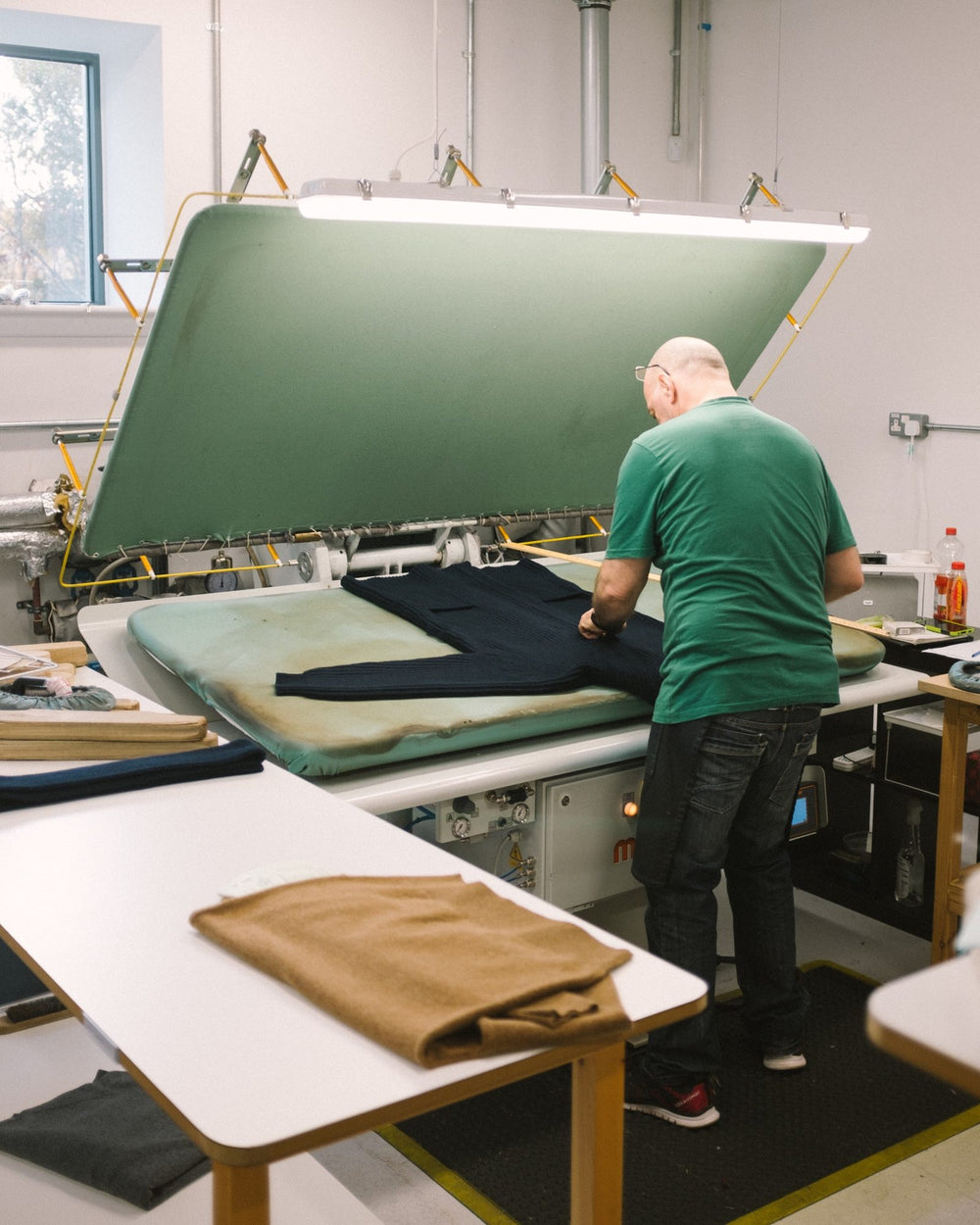
Pressed, inspected, labelled
The sweater is dried, set to its finished measurements and pressed. It is checked once more from end to end, and the labels are sewn in by hand. By now it has passed through the hands of a winder, a knitter, an examiner, a linker, a finisher, a washer and a presser.


How to tell
Four signs of a Hawick sweater
Turn any sweater inside out and you can see how it was made. Here is what to look for in ours.
Fashioning marks
A neat line of small raised stitches along the shoulder seam (on a raglan, along the raglan line), where the frame turned the stitches in.
Linked seams
Flat, stretchy joins with no bulky ridge inside, because each seam is knitted loop to loop rather than sewn.
A dense knit
Hold it up to the light: a tight knit lets little through. More yarn per panel means it keeps its shape.
Softness that grows
Soft from the first wear and softer with each one, because the wash was gentle and the fibre left intact.

Hawick, Scottish Borders
Inside the mill
Knitted in Hawick
Four places to start




Questions, briefly
How is a cashmere sweater made in Hawick?
Cashmere yarn arrives from the spinner on cones, lightly oiled so it can be knitted without breaking. The front, back and sleeves are knitted as separate panels, shaped on the machine (full fashioning), checked by hand, then joined loop by loop on a linking machine and finished by hand. The sweater is washed in soft Borders water to remove the oil and soften the fibre, then pressed, inspected and labelled by hand.
What does fully fashioned mean?
Each panel is knitted to its final shape, narrowed or widened on the machine stitch by stitch, rather than cut from a length of knitted fabric. Nothing is cut, so edges can't unravel. You can spot it by the small raised fashioning marks along the shoulder seam.
Why is cashmere yarn oiled before knitting?
Cashmere fibres are fine and short, and knitting machines pull on yarn hard. The spinner leaves a measured amount of oil in the yarn so it runs through the needles without breaking or shedding. The oil is washed out after the sweater is linked and finished, which is when the yarn's softness comes through.
Does the yarn have a cotton or synthetic core?
No. Our yarn is 100% Grade A cashmere spun by Todd & Duncan, with no core thread. Its strength comes from twisting the fibres and then plying two or more strands together, which is what 2-ply and 4-ply mean.
Why does Hawick water matter for cashmere?
Water in the Scottish Borders is soft, low in the minerals that can leave fibres feeling harsh. Hawick's mills wash finished sweaters in it to lift out the spinning oil and open the fibre gently. Read more in Why water matters in cashmere.
What is linking?
Linking joins knitted panels by hanging every edge loop onto the points of a linking machine and chain-stitching them together. The seam becomes part of the knit: flat, elastic and comfortable, without the ridge of a sewn seam.
Why isn't Scottish cashmere as fluffy as some cheaper sweaters?
Hawick mills wash cashmere only enough to clean it and open the fibre. Heavier washing makes a sweater feel softer in the shop but weakens the surface, so it pills sooner. A Hawick sweater starts soft and gets softer with wear.
Where is Billie Todd cashmere made?
Our yarn is spun by Todd & Duncan in Kinross, and every sweater is knitted and finished in Hawick, Scotland. We design in New England and ship free across the U.S. from Boston.
Read more: Todd & Duncan cashmere, Why water matters in cashmere and A Guide to Scottish Cashmere.

Billie Todd · Hawick, Scotland
Made slowly in Hawick. Worn for decades.
Designed in New England, knitted in the Borders, shipped free from Boston.
Shop cashmere