Cashmere pills when loose fibers on the surface of the knit rub together and twist into small knots, usually where a sweater sees repeated friction: underarms, sides, cuffs, anywhere a bag strap rubs. Nearly every cashmere sweater pills a little, especially in its first few wears. That is normal, and on its own it says less about quality than most people assume. How a sweater is finished, how densely it is knitted, and how it is worn and washed matter as much as the fiber itself.
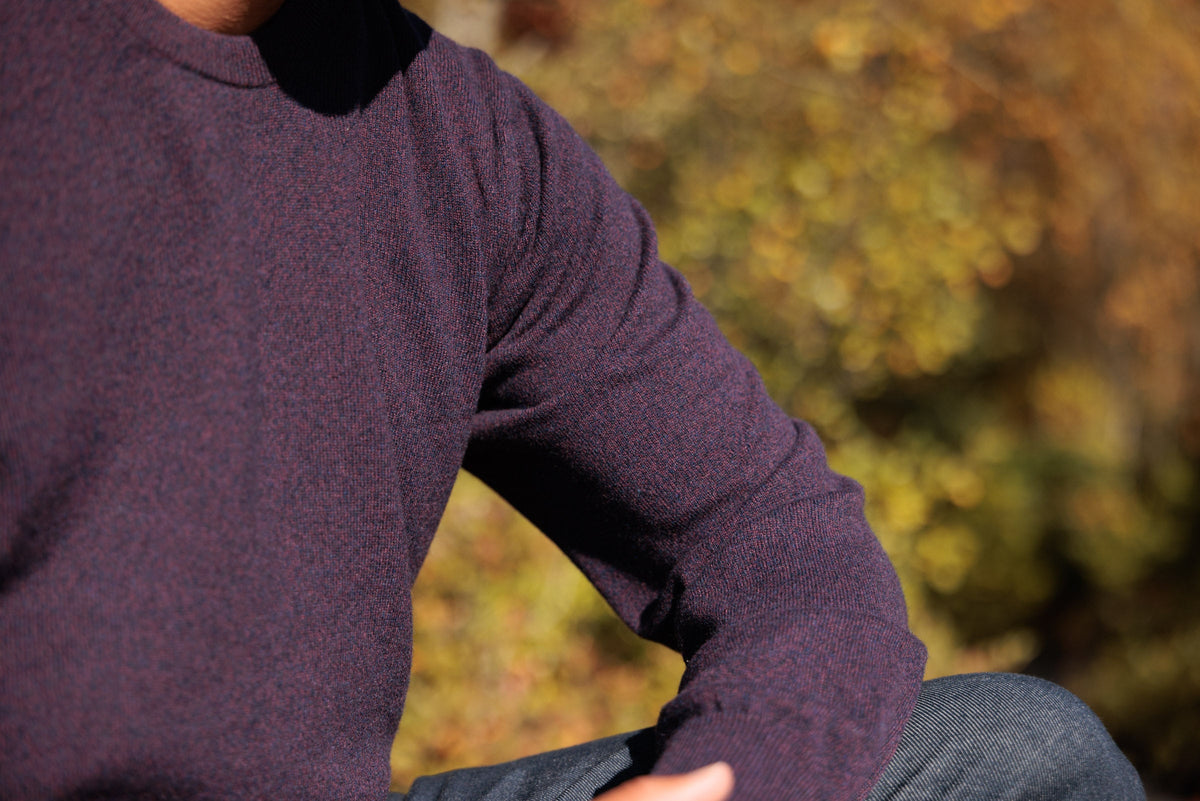
Pictured above: The Earnest 2-Ply Cashmere Crewneck in Heather Plum
What Pilling Actually Is
A pill is a small ball of tangled fiber held to the surface by fibers that are still anchored in the yarn. It forms when fibers sticking out from the knit rub against each other and twist together, often helped by a little moisture from the body. The more loose fiber there is on the surface, the more a sweater will pill. Cotton pills. Wool pills. Cashmere pills. It's a property of spun fiber, not a defect unique to any one material.

Why New Cashmere Pills
A new sweater carries loose surface fibers from spinning, knitting and finishing. The first few wears bring them up, which is why pilling is usually heaviest early on. Washing after the first two or three wears removes many of those stray fibers and settles the knit, and pilling usually eases from there.
Is Pilling a Sign of Poor Quality?
Not reliably. Pilling depends on several things at once, and fiber grade is only one of them. Very fine cashmere is soft precisely because each fiber is thin, and thin fibers are more delicate than coarse ones, so a fine, soft sweater can pill as readily as a cheaper one. A sweater that barely pills may simply have been given an anti-pilling coating, which can leave the fabric feeling slightly slick.
A more useful test is what happens over time with sensible care: whether pilling settles after the first few wears and washes, or keeps appearing across the whole garment. For what fiber grade does tell you, see our guide to Scottish cashmere.
What Actually Causes Pilling
- Heavy finishing. Extra washing, softeners and brushing make a sweater feel fluffier in the shop by raising more fiber to the surface. That loose surface fiber is exactly what pills. Scottish knitwear is traditionally finished more lightly, so it can feel a little firmer at first and softens with wear.
- Loose or open knits. A loosely knitted, open or spongy fabric gives fibers more room to work free. Chunky knits and hand knits can pill more readily for this reason.
- Friction and static. Bag straps, seatbelts, rough denim, a coat or jacket worn over the top, or a sweater crammed onto a shelf all raise and tangle surface fibers. Static that builds up under outer layers adds to the effect.
- Rough washing. Agitation does as much damage as heat. Hot water, rubbing and hard machine cycles stress the fiber; a gentle wash does not.

How Ply and Gauge Affect Pilling
Ply and gauge both play a part, but neither guarantees less pilling. Plying several strands together makes a stronger yarn. Gauge describes how tightly a garment is knitted, and knit density matters more: a dense, tight fabric holds its fibers better than an open one.
So weight alone tells you little. A chunky knit like the Bruce has more surface for friction to work on than a fine, tightly knitted 2-ply like the Earnest, even though both use the same Todd & Duncan yarn, so it is worth giving its friction points a little more attention. For the full relationship between ply, gauge, and how a garment wears, see Cashmere Ply and Gauge Explained.

How Washing and Care Reduce Pilling
Gentle washing helps rather than hurts. It lifts away stray fibers and settles the knit. Wash after the first two or three wears, then every three or four wears after that.
- By hand. The gentlest option, and the one some Scottish mills recommend exclusively. Soak briefly in lukewarm, never hot, water with a little cashmere or wool shampoo. Squeeze the water through gently rather than rubbing or wringing.
- By machine. Several Hawick knitters are happy for cashmere to go in the machine with a little care. Turn the sweater inside out, put it in a mesh laundry bag, and wash it on its own on the wool or delicate cycle with cold water and the gentlest spin.
Either way, roll the sweater in a towel to remove excess water, then dry it flat away from direct heat. Never tumble dry. Between wears, fold knitwear rather than hanging it, and give it room on the shelf instead of cramming it in. Full washing and storage guidance is in How to Care for Cashmere.
How to Remove Pills
Start with a cashmere comb. Lay the sweater flat and pass the comb lightly over the affected area in one direction, only when pills have actually formed. Small pills can also be lifted off by hand.
If you prefer a fabric shaver, go slowly with light pressure, and use it only on plain knits. Ribbed and cable knits are easily snagged. Avoid razors, which can cut and pull up the surrounding fibers, leaving the surface fluffier and more likely to pill again.

When Pilling Is Worth Questioning
One round of early pilling isn't a reason for concern. If a sweater keeps pilling heavily across the whole garment, not just at friction points, even after several gentle washes and careful wear, the cause is more likely to be heavy finishing, a loose knit, or short fiber in the yarn.
Frequently Asked Questions
Is it normal for a new cashmere sweater to pill?
Yes. Most cashmere pills in its first few wears as loose surface fibers rise and knot. Washing after the first two or three wears usually helps it settle.
Does pilling mean the cashmere is low quality?
Not necessarily. Pilling is a natural result of friction on any natural fiber. Finishing, knit density and care all affect how much a sweater pills. Very fine, soft cashmere can pill as readily as cheaper knitwear, and some sweaters pill less only because they have an anti-pilling coating.
Can you machine wash cashmere?
Yes, with care. Turn the sweater inside out, put it in a mesh bag, and wash it on its own on the wool or delicate cycle with cold water and the gentlest spin. Dry it flat and never tumble dry. Hand washing remains the gentlest option.
Does washing make cashmere pill more?
Gentle washing reduces pilling by removing stray fibers and settling the knit. Hot water, rubbing and rough machine cycles are what cause damage.
Does higher ply cashmere pill less?
Not necessarily. Plying makes a stronger yarn, but heavier sweaters are often knitted more loosely, and open knits pill more readily. Knit density matters more than ply count.
What is the best way to remove pills from cashmere?
A cashmere comb, passed lightly over the sweater while it lies flat. A fabric shaver can work on plain knits if used slowly and lightly, but avoid it on ribbed or cable knits, and avoid razors altogether.