

What Is Scottish Knitwear?
The full definition: yarn spun on Loch Leven, garment knit and finished in Hawick, two stages, both in Scotland.

Finished by hand in Hawick, the same finishing floor every Billie Todd garment passes through.
Scottish knitwear is cashmere and wool clothing spun, dyed, and finished in Scotland, most of it in the Borders town of Hawick, where the country's knitwear industry has been centered since the early 1800s. The term covers sweaters, cardigans, scarves, and accessories, but it specifically implies a chain of production: fiber sourced and graded for fineness, yarn spun and finished using the region's naturally soft water, and garments knit to a gauge and ply that determines their weight, drape, and durability.
Not everything labeled "Scottish" in a listing is made this way: a garment is genuinely Scottish knitwear only when the yarn itself, not just the final stitching, comes from a Scottish mill. Billie Todd's cashmere is spun by Todd & Duncan, one of the last vertically integrated cashmere spinners in Scotland, and knit into finished garments in Hawick.
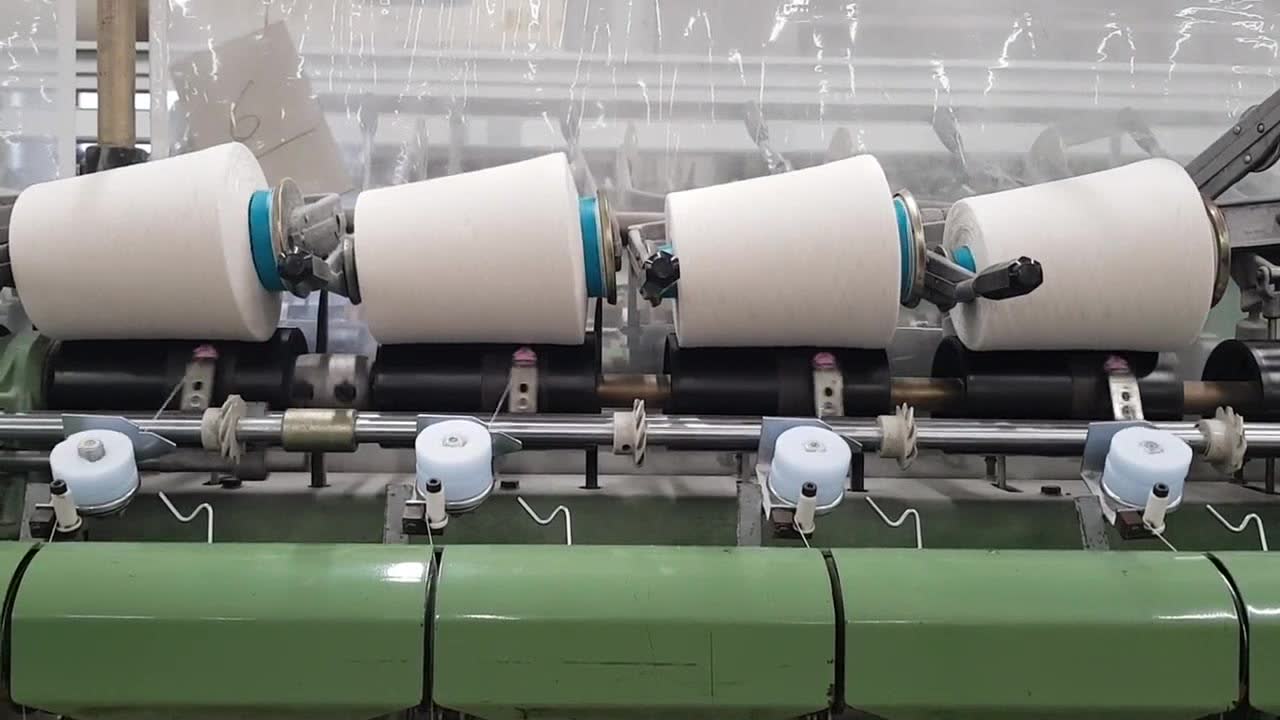
Why Hawick
Hawick has been a center of textile craft since 1820, built on the same natural resource that still defines the industry today: the water of the River Teviot. Cashmere yarn absorbs and releases dye and lanolin differently depending on water mineral content, and the Teviot's soft water is part of why Hawick-finished yarn has a distinct hand-feel: softer, less prone to the slightly waxy finish that harder water can leave behind.
Todd & Duncan, founded in 1867, spins Billie Todd's yarn at its mill on Loch Leven in Kinross before it travels to Hawick for knitting and finishing. Every garment uses Grade A cashmere fiber, spun to a canonical 15.5-micron fineness with a 35mm staple length: the two numbers that determine how soft a sweater feels new, and how well it resists pilling after years of wear.
From Raw Fiber to Finished Yarn
Before the fiber ever reaches Scotland, it's dehaired and scoured to strip out impurities, then washed on arrival using Loch Leven's naturally soft water. That water does more than clean the fiber: its mineral softness helps open the individual strands, which is part of why the yarn takes dye so evenly and finishes with a consistent hand-feel from batch to batch. The wash and dye water is then filtered and returned to the loch rather than discharged, a closed loop the mill has run for decades.
The step that matters most for durability happens earlier than most people assume: carding, where raw fiber is combed straight and parallel before it's ever spun. Newer carding equipment trims the fiber down by 2 to 2.5mm in the process; older machines trim closer to 1mm. That difference sounds trivial, but it's the gap between a yarn that holds onto its full staple length and one that doesn't, which is why mills spinning the finest cashmere tend to keep running older carding machines instead of switching to faster ones. Spinning itself uses a slow "long draw" method, pulling the fiber over a longer distance before twisting it into yarn, which produces a rounder, more voluminous, stronger thread than a quicker short-draw process would.
Full-Fashioned, Not Cut-and-Sew
"Full-fashioned" is a real construction method, not a label. Each panel of the garment is shaped directly on the knitting machine, with stitches added and dropped to build the exact silhouette, rather than knitting one flat sheet of fabric and cutting pieces out of it afterward. A cut edge has to be overlocked to stop it from unraveling, which adds bulk and gives the seam somewhere to pull apart over time. A fully fashioned edge has no cut yarn to unravel in the first place, so it lies flatter and holds up longer. It's also slower and uses more yarn per garment, since the machine can't nest pattern pieces the way a cutting table can, which is part of why cut-and-sew knitwear is cheaper to produce.
The seams are joined by hand-linking: each finished panel is connected loop by loop rather than run through a standard sewing machine. It takes a trained eye and far longer than machine seaming, but it's what a truly flat, low-bulk seam actually requires. This is the kind of finishing work behind "finished by hand in Hawick," and it's also why genuinely full-fashioned knitwear is knitted in small batches by skilled hands rather than mass-produced.
Knitting tension matters just as much as the construction method. A densely knit garment holds more yarn per square inch, which is what lets it keep its shape wear after wear; a loosely knit one feels lighter at first but stretches out of shape and thins out faster, no matter how good the fiber underneath it is.
Behind this is a piece of genuinely old engineering: the Bentley-Cotton frame. The "Cotton" name traces back to William Cotton & Co., a Loughborough machine builder that helped pioneer fully-fashioned knitting frames in the 1860s, shaping panels by adding and dropping needles across a straight bar rather than knitting a continuous tube. When Cotton's original patent expired in 1879, the design spread and was built on by other manufacturers; Bentley Engineering later acquired William Cotton Ltd outright, folding the machine into its own line as the "Bentley-Cotton" frame. Classic styles like a crewneck or v-neck are still knitted on these older frames today, at 12 gauge, a deliberate choice over newer, faster equipment that gives up some of that control over the finished shape.
Ply, Gauge, and Why They're Not Marketing Words
Three technical choices separate a genuinely well-made garment from one that only sounds like it.
How many strands of spun yarn are twisted together before knitting. A 2-ply sweater is lighter and drapes closer to the body; 4-ply or higher is substantially warmer and more structured. A brand offering only one ply across its whole line is optimizing for cost, not fit.
The stitch density: how tightly the yarn is knit. Fine gauge produces a smoother, more refined surface; a looser gauge shows more texture but can lose shape faster with wear.
Sorted for both fineness and length before anything else happens. Grade A cashmere resists pilling for years; lower grades blend in shorter, coarser fibers that show up as pilling within months.

Warmer, more structured, built for layering under a jacket.

Substantial enough to wear as outerwear on its own.
"The only cashmere sweater you'll need."
Robb Report, on the Loden, singled out for holding its shape and resisting pilling after extended wear
Named by The Wall Street Journal as the benchmark for what genuine Grade A cashmere should cost.
Explore Scottish Cashmere Knitwear
Spun by Todd & Duncan, knit in Hawick.


Frequently Asked Questions
Is 2-ply or 4-ply cashmere more durable?
Ply affects warmth and structure more than raw durability: durability comes primarily from fiber grade and staple length. Higher-ply yarns generally resist stretching out of shape over time simply because there's more yarn holding the knit together, but a well-made 2-ply garment from Grade A fiber will outlast a poorly made 4-ply from shorter, coarser fiber.
What's the difference between 2-ply and 3-ply yarn for a sweater?
The number refers to how many spun strands are twisted together. 2-ply is lighter, drapes more like a traditional knit sweater, and layers well. 3-ply, less common than 2- or 4-ply in finished sweaters, sits between the two: slightly warmer and more substantial without the structure of a true 4-ply.
What does "fine gauge" mean for a sweater?
Gauge describes how many stitches per inch a garment is knit at. Fine gauge means more, smaller stitches, producing a smoother, less bulky surface and a more tailored silhouette. Coarser gauge knits faster and shows more visible texture, but the finished garment is bulkier.